

This event is now available on demand. Please contact events@chemicalwatch.com for pricing and access. You can also find more recent editions of this event on our Events Portal.
Agenda
Welcome and introduction
Terry Hyland, Chemical Watch News & Insight, Enhesa Product Intelligence
Session 1: Regulatory landscape & policy updates
PFAS policy, regulatory, and stewardship developments in the U.S.
- the Administration’s evolving PFAS policy;
- Federal regulatory initiatives;
- State regulatory initiatives; and
- stewardship trends.
Lynn L. Bergeson, Bergeson & Campbell, USA
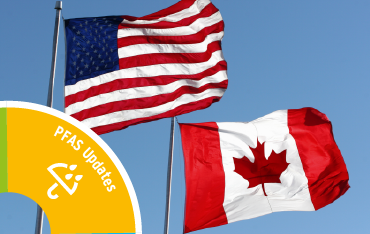
PFAS regulation in the U.S. States and Canada
- all PFAS are not the same: overview of sub-groups of PFAS;
- the unique combination of properties that make fluoropolymers indispensable to multiple industries;
- an overview of PFAS regulation in the U.S. states with select case studies; and
- Canada’s approach to PFAS assessment and regulation.
Jay West, American Chemistry Council (ACC)
Using TSCA to turn off the PFAS tap: Opportunities and benefits
- overview of USEPA approvals to import and produce PFAS;
- distinguishing among categories of PFAS uses;
- comparison of what USEPA knows now about the impact of PFAS compared to when many of the approvals to import and produce PFAS were granted; and
- opportunities for turning off the PFAS tap.
Maria Doa, Environmental Defence Fund
Q&A session
Refreshment break
Session 2: PFAS regulatory pathways
Maine’s PFAS in products program
- discuss Maine’s law prohibiting PFAS in products sold in the state; and
- review Maine’s unique currently unavoidable use process, which allows products with this designation to continue to be sold.
Kerri Malinowski Farris, Maine Department of Environmental Protection
EU PFAS updates
- where does the proposed PFAS restriction stand?; and
- PFAS litigation cases in the EU — something quite new.
Herb Estreicher, Keller and Heckman LLP, United States
Q&A session
PFAS in Transition: Aligning Regulation, Innovation, and Business Strategy
Panel discussion:
A multi-sector panel explores how regulation, industry practices, and innovation intersect to reduce PFAS risk and advance sustainable solutions.
Herb Estreicher, Keller and Heckman LLP, United States; Maria Doa, Environmental Defence Fund; Kerri Malinowski Farris, Maine Department of Environmental Protection; Elizabeth Denly, TRC; Gabriel Salierno, Massachusetts Toxics Use Reduction Institute - UMass Lowell
Lunch and networking
Session 3: Compliance & industry impact
Welcome back
Terry Hyland, Chemical Watch News & Insight, Enhesa Product Intelligence
Risk-based prioritization for PFAS regulation: A shift in policy for a complex chemical class
- obstacles to regulating PFAS as a broad chemical class;
- trends towards risk-based regulation; and
- looking around the corner at USEPA’s risk-based regulatory efforts and potential preemption initiatives.
Michael Nagelberg, DLA Piper LLP
Major EPA actions to combat PFAS contamination
- overview of actions announced by USEPA to address PFAS;
- relationship to USEPA’s powering the Great American Comeback Initiative;
- guiding principles for USEPA’s actions;
- comparison to USEPA’s prior PFAS Strategic Roadmap; and
- progress on USEPA’s actions to date.
Michael Boucher, Steptoe
PFAS litigation: What it is and why it matters
- state of play of PFAS litigation in the United States and understanding scope of PFAS liability;
- overview of AFFF MDL litigation and expansion of PFAS litigation beyond the AFFF MDL, including secondary manufacturers, and consumer goods and product litigation; and
- trends and mitigation strategies.
Drew Cleary Jordan, Morgan Lewis
Q&A session
Refreshment break
Session 4: Science, testing & innovation
Evaluating different methods for PFAS analysis of consumer products: How does this impact our assessments?
- results of a study aimed to quantify PFAS or fluorine content in three distinct consumer products using total fluorine, total inorganic fluoride, solvent extraction, and leachate analyses to assess PFAS presence and bioavailability of PFAS to consumers; and
- will evaluate the strengths and limitations of each method and assess how data interpretation varies depending on the analytical approach used.
Elizabeth Denly, TRC
Retailer-led solutions to PFAS: Managing chemicals of high concern in the marketplace
- how regulatory, legal, and reputational risks are prompting retailers to act on PFAS;
- examples of retailer policies restricting PFAS in products, packaging, and supply chains;
- business strategies for mitigating PFAS-related risk through transparency and safer chemistry; and
- how the Retailer Report Card framework, the Essential Elements for a Safer Marketplace, provides a roadmap for businesses to restrict PFAS and advance safer solutions.
Mike Schade, Toxic-Free Future, United States
PFAS-Free alternatives & sustainable innovation / avoiding regrettable substitution
- TURI supports businesses, researchers, policymakers, and communities to eliminate hazardous PFAS through innovation, information, and practical solutions;
- TURI provides resources to reduce PFAS use, ensure compliance, and shape policy by defining PFAS categories, supporting business tracking, and researching safer alternatives;
- TURI collaborates on PFAS-free textiles, semiconductors, computing, food packaging, and electronics, achieving competitive performance and cost savings; and
- TURI promotes PFAS-free options for artificial turf, firefighting gear, and AFFF, tackling supply chain challenges with advanced detection methods.
Gabriel Salierno, Massachusetts Toxics Use Reduction Institute - UMass Lowell