

This event is now available on demand. Please contact events@chemicalwatch.com for pricing and access. You can also find more recent editions of this event on our Events Portal.
Agenda
Welcome and introduction
Judy Jackson, Chemical Watch Research Ltd.
Global perspectives on reducing harm from PFASs
Arlene Blum, Green Science Policy Institute and Research Associate in Chemistry, Department of Cell and Molecular Biology, University of California at Berkeley
Session 1: Regulatory updates for PFASs
Moderator:
Jean-Philippe Montfort, Mayer Brown Europe-Brussels LLP
OECD work on PFAS at global level
- The what and why of the OECD/UNEP Global PFAS Group
- Latest group reports and activities
EU policy and regulatory overview
- The policy framework to address PFAS concerns
- The EU chemicals strategy for sustainability and the PFAS action plan
- Actions under REACH and other EU legislations
Valentina Bertato, European Commission, DG Environment
Update on US activities related to PFASs
Jeffrey L Dawson, US EPA
Overview of US State level activities and some insights into Asia Pacific
- Differing state approaches to PFAS drinking water regulations
- How the environmental justice movement is shaping state-level PFAS activities
- Consumer goods regulations – which products are in the crosshairs and which will be next?
- How states are addressing PFAS-related greenwashing concerns
- Regulatory updates from Asia Pacific
John Gardella, CMBG3 Law, USA
Q&A and panel discussion: Discuss and compare different regulatory approaches and timelines
Short break
Session 2: The complexity of decision making on PFASs
Moderator
Lori Bestervelt, Scivera/Enhesa
The Royal Society of Chemistry’s new policy position ‘Risk-based regulation of per- and polyfluoroalkyl substances’
Camilla Alexander-White, Royal Society of Chemistry
Views of FPP4EU on opportunities and challenges of PFAS regulatory measures for the chemical industry
- Introduction to Cefic Sector Group FPP4EU on FluoroProducts and PFASs for Europe
- Activities of the group focusing on grouping and risk assessment challenges
- Downstream user input via active collaboration platform
- Need for collaboration with all key stakeholders
Marleen Pauwels, European Chemical Industry Council (Cefic)
Risk assessment and risk management of PFAS restrictions at the European Chemicals Agency
Peter Simpson, Rud Pedersen Public Affairs
A chemical category-based approach for selecting and screening PFAS for toxicity and toxicokinetic testing
Richard Judson, US EPA
Evaluating alternatives to PFASs as a class of chemicals in consumer products in a regulatory context – examples from Washington State
- Introduction to the Safer Products for Washington Programme
- Use of a class-based approach to assess and compare hazards
- Application of this approach to evaluate potential alternatives to PFAS-containing consumer products
Rae Eaton, Hazardous Waste and Toxics Reduction program, Washington State Department of Ecology
Q&A and panel discussion: How can we best define PFASs, group them and determine which, if any, are safe?
Short break
Session 3: Availability of PFAS alternatives
Moderator
Chris Enlow
OECD reports on alternatives in paper and paperboard for food packaging and in the paints, coatings and varnishes sector
- Main findings of the two reports on identification of alternatives
- Challenges to such analyses
- What do we know about the hazards of the alternatives?
Availability, challenges and gaps for alternatives PFAS in different sectors
- PFAS phase-out is in progress and there is a need for safer alternatives
- Which functions and uses are covered by safer alternatives?
- In which sectors do we need more information regarding alternatives?
- How should other challenges connected to PFAS phase out – such as performance or communication – be tackled?
Jonatan Kleimark, ChemSec
Accelerating the transition to PFAS-free chemistry in consumer products
Martin Mulvihill, Safer Made
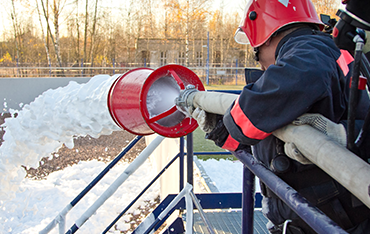
PFAS-free Fire Fighting Foams
- Changing marketplace – a snap-shot of the different types of regulations around the world and the short timelines users of firefighting foams are facing
- Do they work? – looking at the fire performance of some fluorine free foams
- Can I use it? – independent certification of the environmental credentials and how to apply them
- Deploy for use – lessons learned when transitioning fire suppression systems to a fluorine free foam
David Plant, Angus Fire
Q&A and panel discussion: Successes and challenges for developing PFAS alternatives for different uses and sectors
Short break
Session 4: Case studies from different stakeholders
Moderator:
Chris Enlow
Global PFAS regulations: A manufacturer’s perspective
Martyn Shenton, AGC Chemicals Europe, Ltd
NGO project on PFASs in consumer products
Yuyun Ismawati Drwiega, Nexus3 Foundation
Eco-Products: Finding PFAS alternatives for foodservice packaging
- Eco-Products overview
- PFAS impacts on foodservice packaging
- Our PFAS alternative roadmap
- Our proprietary Vanguard™ formulation and regrettable substitutes
Nicole Tariku, Eco-Products, PBC
Nike's transition to PFC-free durable water repellents across the business
- Nike's PFC-free commitment and where it started
- Avoiding regrettable substitutions
- Apparel/accessories strategy
- Footwear strategy
- Lessons learned
Josh Goebel, Nike